
How are the embryos frozen and thawed?
Embryos can be frozen at any stage (pronucleate (one cell), early cleaved and blastocyst) if they are of good quality. Embryos are stored in batches of one or more embryos depending on the number of embryos that are likely to be transferred into the uterus at a later date.
Embryos are mixed with a cryoprotectant fluid (to protect embryos from damage during freezing process). Then, the mixture is put either in a plastic straw or a glass ampoule and stored in liquid nitrogen at a very low temperature –196°C using a specialized programmable machine.
Conventional freezing involves slowly cooling the embryo until it finally freezes. A major problem associated with conventional freezing is the formation of ice crystals which may damage the embryo. A new method called vitirfication is gradually replacing the conventional method. It involves ultrarapid freezing so that no ice crystal will not develop.
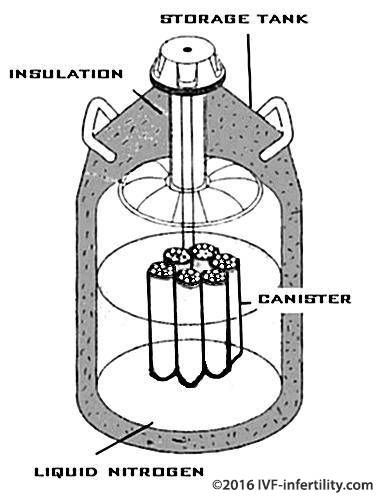
Thawing of embryo involves removing the embryos from the liquid nitrogen, thaw at room temperature, remove the cryoprotectant fluid and mix the embryo in a special culture media. The mixture is then kept in the incubator ready for transfer.
If the embryos were frozen at cleaved stage or blastocyst, they can be thawed and replaced in the same day. However, if they were frozen at the two-pronucleate stage, then they are thawed on the day before and cultured overnight to allow them to divide and are replaced when they become 2-4 cell embryo (s).