
Freezing of spare embryos (cryopreservation of supernumerary embryos)
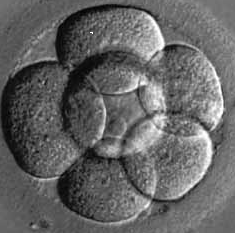
For some couples undergoing IVF, one of the most significant ethical issues they may face is the fate of the surplus embryos.
Following embryo transfer, any remaining viable embryos are then cryopreserved (frozen) for later transfer. Not all embryos are suitable for freezing. The embryos can be frozen at the pronucleate, early cleavage or blastocyst stage. Overall about 50% of frozen embryos survive the thawing process. In the United Kingdom, the embryos can be frozen for up to 10 years with the intent of thawing and transferring them at a later date.
- Cryopreservation is accepted in some countries but banned in others.
- Freezing spare embryos allows multiple embryo transfers from a single egg collection and improves the chance of live birth. Freezing is very cost effective, since transferring is much less expensive than starting a new IVF treatment cycle.
- Frozen embryos can be thawed and replaced in either natural or artificial cycles. In women who ovulate regularly, the likelihood of a live birth after replacement of frozen thawed embryos is similar whether natural or artificial cycles are used.
- The success rates with frozen embryo transfer vary greatly from center to center.
- Babies born following embryo freezing have the same risks of abnormalities as those born following IVF, i.e. the same as those conceived normally.
- If you decide that you no longer require the frozen embryos, they may be allowed to perish, be used for research or donated to infertile couple(s) according to your wishes and the current legislation in your country.
- Not all clinics are able to offer freezing facilities.